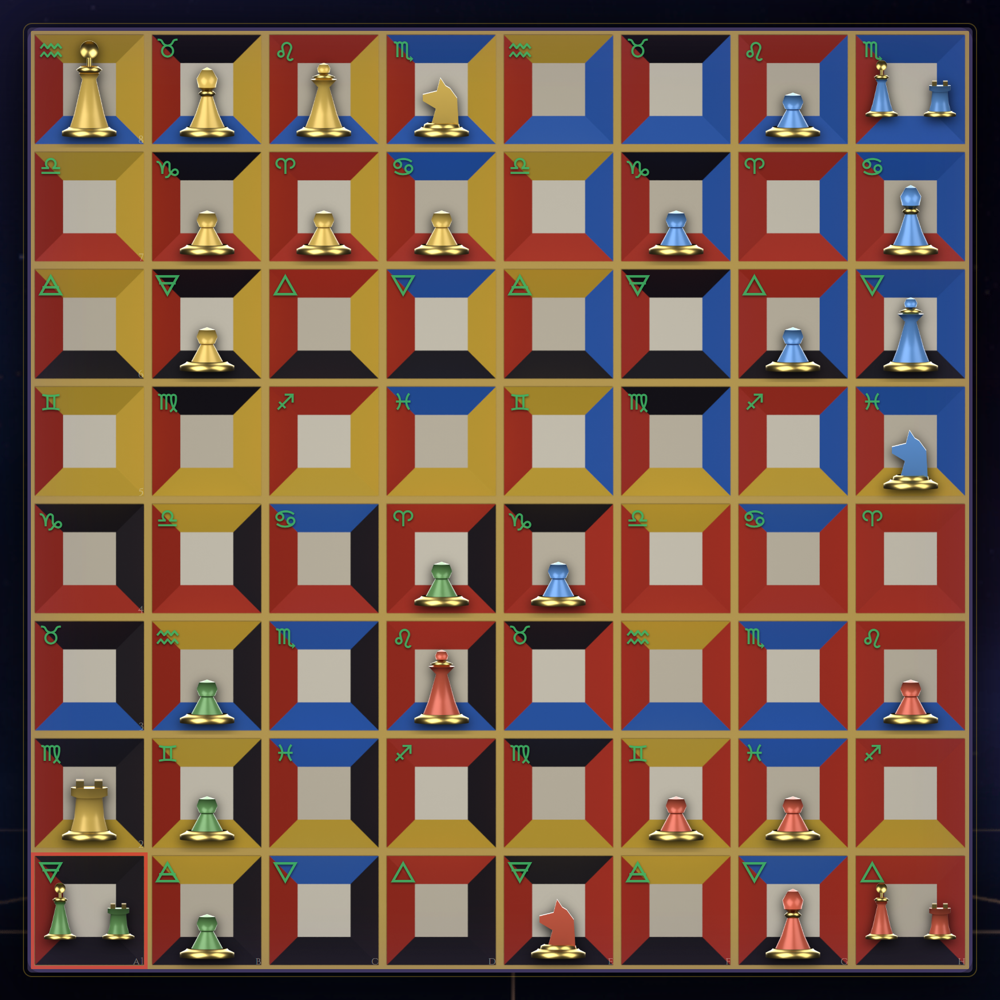
Enochian chess is played on one of four boards, each ruled by a classical element. The four look alike at a glance, an eight-by-eight grid of colored pyramid squares, but the board you choose changes who moves first, which colors lead, and the elemental world a divinatory reading speaks from. The four seats and their two alliances stay the same on every board.
Choosing a board
On the Fire board, the Fire army opens and warm reds carry the field. On the Water board, Water opens and cool blues lead. The Air and Earth boards do the same for their own armies, gold for Air and green for Earth. Picking a board is a real decision. It hands the first move to that element's army and colors the tempo of the game toward that element's nature: quick and kindling for Fire and Air, holding and enduring for Water and Earth.
The four boards, one by one
The four boards share a structure but differ in mood. Each hands the opening move to its own army and leans the game toward that element's nature. Here is each one and what it brings.
The Fire board
On the Fire board the Fire army opens and the reds lead. Fire is the element of will, drive, and sudden action. A game begun here tends to run hot and fast, with early captures and less patience on all sides. If your question is about ambition, a conflict, or something that needs a decisive push, the Fire board sets the right tone.
The Water board
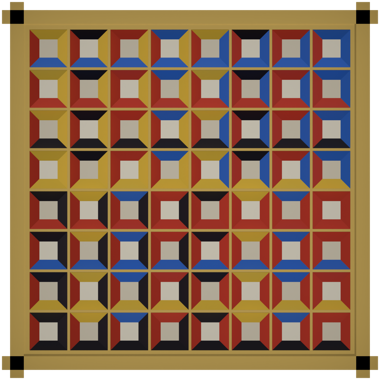
On the Water board the Water army opens and cool blues carry the field. Water is the element of feeling, love, healing, and the life of the inner world. Games here tend to be more fluid and defensive, matters resolved by holding and adapting rather than by force. It suits questions of relationship, emotion, and what needs time to settle.
The Air board
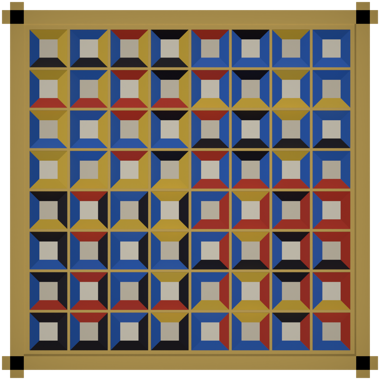
On the Air board the Air army opens and gold and yellow lead. Air is the element of thought, speech, and movement, the quick play of the mind. Games here reward clever maneuver and shifting angles of attack. Choose it for questions about ideas, communication, learning, or a decision that turns on information.
The Earth board
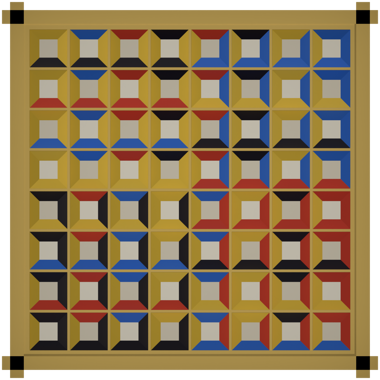
On the Earth board the Earth army opens and greens and dark tones ground the field. Earth is the element of the body, work, money, and the material world, slow to move and slow to yield. Games here are patient and positional, decided by who builds and holds the better structure. It fits questions of work, resources, health of the body, and anything that must be built to last.
Why every square is a pyramid
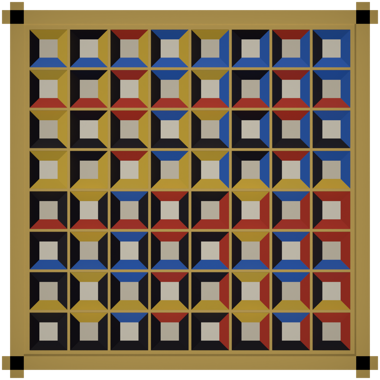
Look closely and each square is drawn as a small pyramid seen from above, its four sloping faces meeting at a center. Those faces are not decoration. Each one carries part of the square's meaning: the board's element, the letter of its column, the quarter or lesser angle it belongs to, and the letter of its rank. Together they give the square a sign of the zodiac or an elemental force, which is what lets a finished game be read as an oracle. The divination page covers how those meanings are read.
The two alliances
Four armies, two teams, and the teams never change. Water and Earth stand together as the passive, receptive side: the forces that receive, hold, grow, and consolidate. Air and Fire stand together as the active side: the forces that move, think, dare, and ignite. Your ally sits at the corner diagonally opposite you. You cannot capture each other, you share the win, and in a tight spot you can rescue an ally's threatened King into your own keeping so the army fights on.
An alliance wins by capturing both of the opposing Kings. That is why the board and its four corners matter as much as the pieces: you are always playing two games at once, protecting your side of the board while your ally works the other. Read how to play for the full rules, or start a game and pick a board now.
Try each board
The quickest way to feel the difference is to play one game on Fire and one on Water. Free, in your browser.
Choose a Board